Knights · UPDATED SEPTEMBER 3, 2026
Knight Satisfaction, Grievances, and Leaving
A source-tracked knight satisfaction, grievances, and leaving with a practical route, failure checks, and current-version boundaries.
Check grievances before dispatch, avoid repeatedly overusing one specialist, and keep notes on conversations that precede satisfaction changes. The main failure to avoid: Treating every dialogue response as a universal approval button can damage another relationship or conflict with the Sovereign's intended personality.
The verified starting point for Knight Satisfaction, Grievances, and Leaving
Official material warns that Knights need to remain satisfied and can leave; court conversations and individual relationships are part of roster management. That is the narrow fact boundary for this page. It tells us which mechanic or sequence exists, but it does not turn every community shortcut, extracted note, promotional frame, or remembered playthrough into a active rule.
The official Steam page describes a daily rhythm of hearing subjects, making decisions, balancing five groups and the Treasury, recruiting Knights, assigning quests at the Round Table, expanding annexes, and rewinding through the Demon in the Crypts. For knight satisfaction, grievances, and leaving, work from that official overview as identity and gameplay layer verification. Specific values and branch conditions still need their own listing, presented game situation, or reproducible reproduction.
A practical route for Knight Satisfaction, Grievances, and Leaving
inspect grievances before dispatch, avoid repeatedly overusing one specialist, and maintain notes on conversations that precede satisfaction changes. Read the full objective before committing resources, because the useful order is defined by the dependency that blocks progress rather than by whichever interaction is closest on page.
Write the run as input, action, return, and next dependency. This format makes knight satisfaction, grievances, and leaving easy to repeat after a patch and makes a failed attempt useful: another player can see whether the wrong item, setup, location, character, or sequence caused the mismatch.
What to check before you commit
Before working on knight satisfaction, grievances, and leaving, confirm the displayed game identity, installed Steam build, save or cycle starting state, location, active mode, and any temporary quest or event marker. Then capture the page that names the objective. A clean baseline matters more than an unexplained number because it identifies what the game was actually evaluating.
For knight satisfaction, grievances, and leaving, retain reversible preparation separate from irreversible action. Buying general supplies, reading a panel, or arranging a workflow can usually be undone; consuming unique bait, accepting a binding choice, spending scarce currency, starting a timed run, or rewinding progress may not be.

Use the visual checkpoints correctly
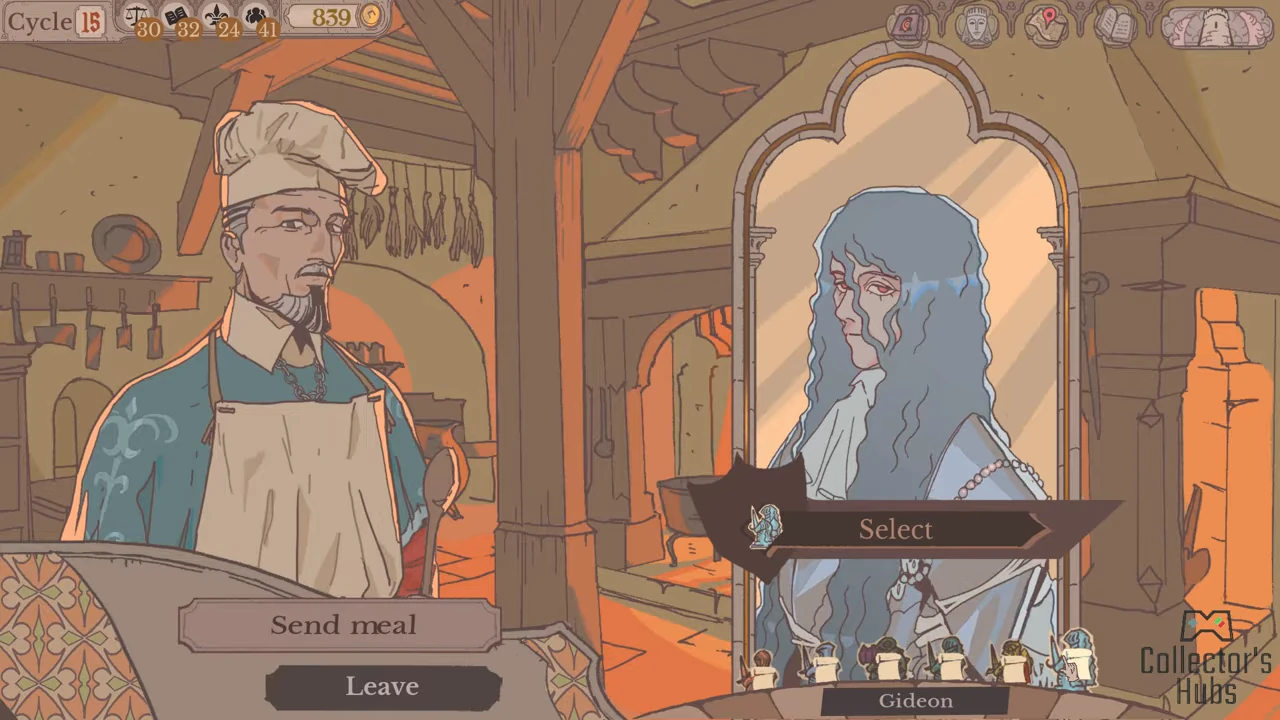
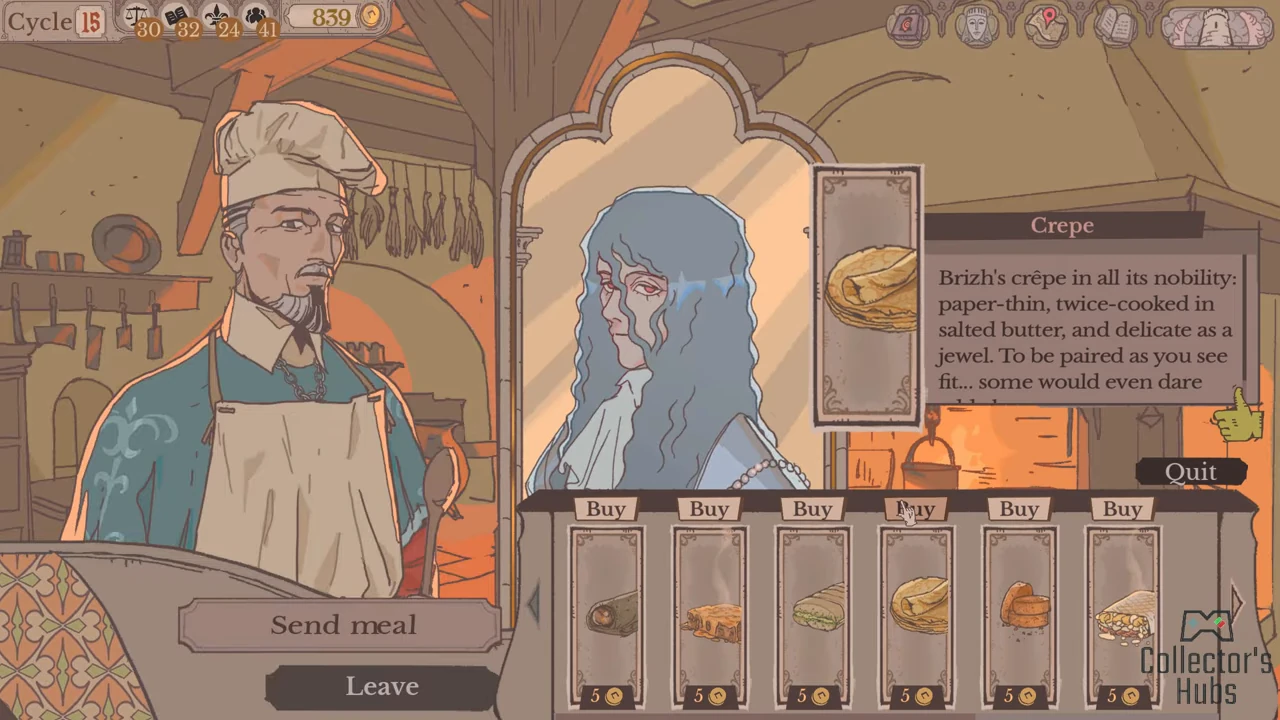
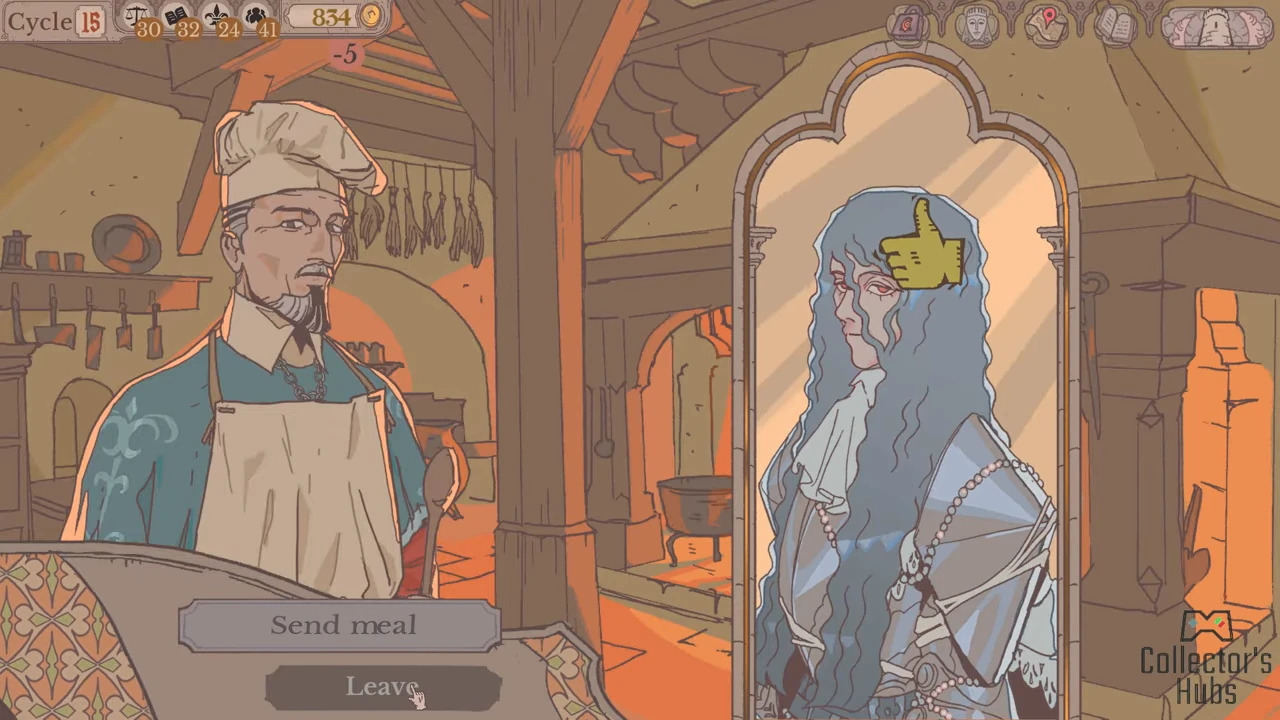
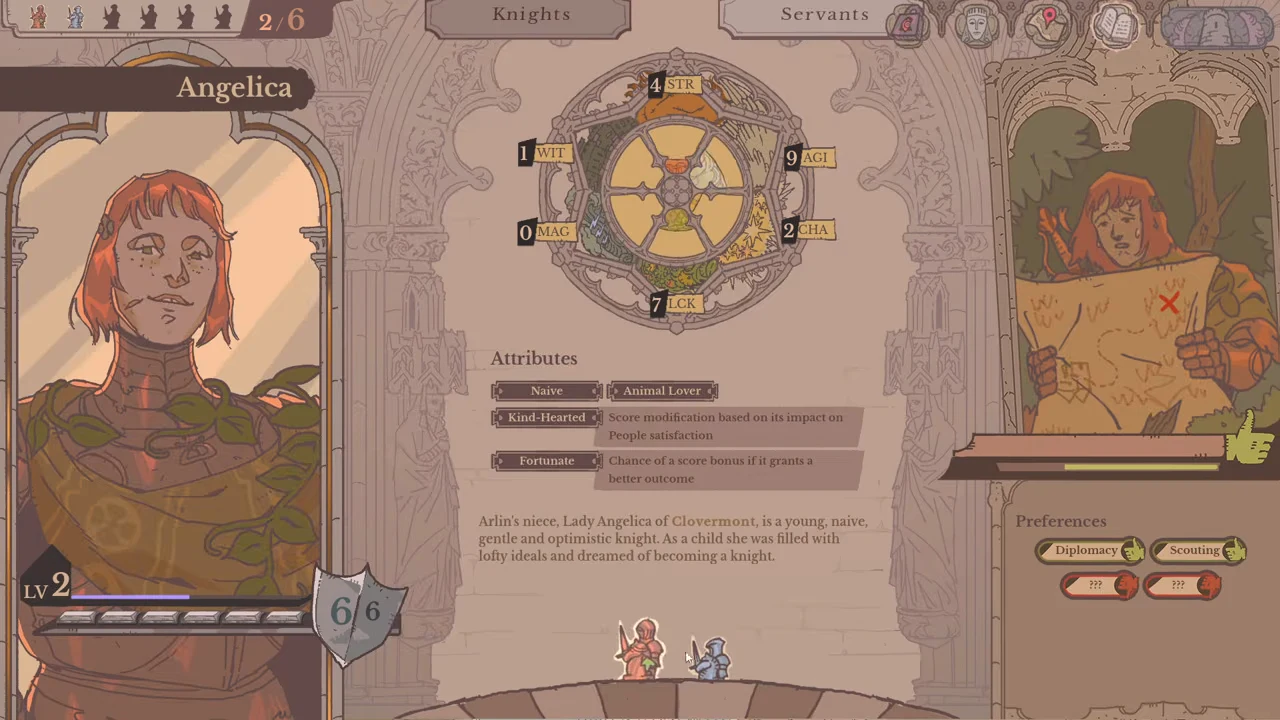
The official screenshots on this page help recognize the interface family, shop, island, court view, character scene, or activity connected to knight satisfaction, grievances, and leaving. They are not a hidden database. A marketing image may use another language, account, camera position, or pre-release build.
For knight satisfaction, grievances, and leaving, match the capture to the running client by stable landmarks rather than assuming every on-screen label is running. If the live screen differs, follow the live navigation for the operational step and capture the mismatch. Preserve the image as context, not as proof of an unrelated number or trigger.
The failure pattern to avoid
Treating every dialogue response as a universal approval button can damage another relationship or conflict with the Sovereign's intended personality. This is the most likely way a plausible path becomes wasted time. Stop when the required label, item, person, shelf, quest, mode, or progression flag is missing; do not continue by substituting a nearby object just because the names or colors look similar.
When the expected knight satisfaction, grievances, and leaving return does not occur, review one variable at a time. read location and mode first, then inventory or roster condition, then quest order, then build or patch. Changing several factors together may produce success, but it removes the support needed to explain which correction worked.
Separate confirmed facts from working advice
A confirmed fact for knight satisfaction, grievances, and leaving comes from the active game, an official client family or developer statement, or a clearly attributed third-party observation whose context can be checked. Advice is a procedure that reduces risk or work. Inference is a possible explanation. These three labels should not be collapsed into one confident sentence.
For knight satisfaction, grievances, and leaving, The official page confirms the systems but not a complete choice tree, all 312 community-listed quests, every ending trigger, or the return of every Knight and quest pairing. Those details remain record-labelled and version-sensitive. When a record gap touches a numeric numeric entry, spawn chance, hidden prerequisite, exhaustive list, or universal best choice, this playbook leaves the field unresolved or describes a verification method instead of inventing precision.
How to record a useful result
After completing the knight satisfaction, grievances, and leaving path, save the final baseline with the date, build, mode, location, and relevant inventory, roster, affinity, shop, island, or quest context. Note the specific text the game displayed and whether the outcome was repeatable, random, conditional, or still ambiguous.
A knight satisfaction, grievances, and leaving correction should name the page URL, the sentence or step that failed, and the smallest replacement supported by fact record. Keeping old observations as dated history is safer than silently overwriting them, especially for quest branches, boss triggers, item positions, achievements, and build change-sensitive mechanics.

Reconcile the sources for Knight Satisfaction, Grievances, and Leaving
Start with the official page for identity and advertised scope, then refer to the attributed community or media record only for the narrower knight satisfaction, grievances, and leaving observation it actually documents. Official material warns that Knights need to remain satisfied and can leave; court conversations and individual relationships are part of roster management. If two sources describe different states, preserve both dates and contexts instead of averaging them into a third answer that neither record supports.
The working recommendation on this page is: verify grievances before dispatch, avoid repeatedly overusing one specialist, and keep notes on conversations that precede satisfaction changes. Its confidence depends on the particular step being tested. Broad module facts may stay stable for many builds, while a price, count, shelf position, quest condition, boss trigger, item label, or achievement procedure can change quickly. Recheck the smallest volatile field first and leave unrelated verified material intact.
When to use a different guide
This page is focused on knight satisfaction, grievances, and leaving. Move to a location reference when navigation is the blocker, an item or database page when identification is the blocker, a progression reference when a prerequisite is missing, and the revision log when the same method changed across builds. That prevents one page from pretending to answer every neighboring question.
After checking knight satisfaction, grievances, and leaving, use the site library to follow the actual dependency chain rather than reading in publication order. The correct next page is the one that resolves the next unconfirmed. If the running problem is already solved, stop; extra changes create new variables and make later troubleshooting harder.
Final checklist for Knight Satisfaction, Grievances, and Leaving
Before starting knight satisfaction, grievances, and leaving: verify identity, release, mode, save configuration, target, required resource, and recovery point. During the path: difference one meaningful factor and retain unique quest items or source trail. Afterward: capture the outcome, revision the checklist, and restore a safe configuration before experimenting with an alternative.
The short rule is simple: examine grievances before dispatch, avoid repeatedly overusing one specialist, and leave notes on conversations that precede satisfaction changes. Then verify the visible outcome instead of assuming the test path worked. If the outcome conflicts with this page, leave the contradiction and work from the cited sources as a starting point for a narrower retest.